


Digitalize, centralize, and monitor: How companies use AirPlus Virtual Cards for smarter, simpler online and ad hoc purchases

Content

Single-use

Multi-use | Sacmi case study
Integrating virtual cards into procurement platforms
The different types of virtual cards
5
How suppliers benefit from virtual card payment
Why virtual card acceptance can be good business for suppliers (regardless of merchant fees)
Improving supplier relations with virtual cards
6
Even minor expenditures can incur hefty costs

The potential of ad hoc expenses for cost savings
Why to take a closer look at your ad hoc and online purchases
2
Ad hoc and online purchases | Challenge and opportunity for companies
1
The virtual credit card | Jack of all trades with huge growth potential
3
How company stakeholders benefit from virtual cards
4
Case study | Sagemcom on single-use virtual cards
7
Ad hoc and online purchases | Challenge
1


Your marketing department wants to buy a video jingle on the internet, the IT department has to pay online for software licenses, and the strategy team needs a study for their work. No problem – except that most online providers of software, image materials, studies, training sessions, and many other products demand immediate online payment. Purchases like these are generally impossible to handle within a company’s existing procurement system. Employees often turn instead to their company card - or even private ones - which has many disadvantages for their companies. There is no big-picture view of this kind of spending,
The COVID-19 pandemic has forced many companies to seek out innovative approaches to the purchasing and payment processes that previously required a physical presence. Many companies still process invoices and payments manually – especially for ad hoc and online purchases. But when employees are working from home, there is no one on site to process invoices and order payments. The uncertainty surrounding how long the situation will last has also led companies to look for alternative sources of working capital.
Virtual credit cards can be the solution for these kinds of business spending. They make it possible to digitalize, centralize, plus they can have a positive impact on a and monitor online and ad hoc purchases, company’s cash flow. This ebook takes a closer look at virtual cards and the possibilities they offer for smarter, simpler corporate payment.
there is hardly any way to monitor these purchases, and there is a lot of time and effort involved in reimbursing expenses after the fact – employees and accounting alike.


Cleaning services, tools, catering, IT hardware, and office supplies | Most companies with a purchasing department are well positioned when it comes to these kinds of recurring indirect purchases. Requests for proposals are organized, framework agreements are signed, and the volume typically goes to just a few suppliers. This has brought significant savings in some cases compared to individual order placement. So everything is under control, right? Yes and no. It would be, if not for the large number of ad hoc and one-time purchases,
Why to take a closer look at your ad hoc and online purchases
2

many of them made online, by different employees, from the office, from home, hard to plan for and predict – and most companies have a hard time getting them under control. There is no central way of paying, no overview of total spending, no way to monitor what is going on, and there are no suitable and efficient processes for approval, coordination, and payment. Plus, if the invoices are paid directly out of the bank account, it also


Hidden costs for ad hoc expenses (EUR)
Total costs
Annual review of supplier data
Costs for advance payments
Processing costs for payment by invoice
Supplier referencing
Even minor expenditures can incur hefty costs
At first glance, these kinds of purchases might seem insignificant compared to those of recurring, highpriced products. Although they account for only about 20 % of the total volume, they are responsible for a significant 80% of the administrative costs associated with indirect purchases (Les Echos 28/2/2017). The various products ordered on an ad hoc basis here and there come from many different suppliers, each one of which has to be set up and managed in the system, and these transactions generate hundreds of invoices to approve, process, and pay.
2
The figures are the result of a survey of 400 purchasing managers by the company Ideal Gourmet
151
52
322
65
54

The potential of ad hoc expenses for cost savings (1)
2

optimizing payment deadlines (over invoices, e.g.)
improving the ability to plan for costs
simplifying processes so employees can focus on their core business
easy reconciliation with payment metadata
minimising risk
centralizing payment
gaining oversight and transparency on spend
increasing cash flow
Negotiating and implementing supplier agreements has always been a key focus of purchasing departments. Especially at a time when growth is slowing, good supplier management helps to reduce and control costs, directly contributing to companys performance.
But traditional supplier management reaches its limit when it comes to the ad hoc purchases made from many different suppliers, many of which are also only on a one-time basis. With ad hoc purchases, the factors that directly affect a


Yes !
Virtual cards, which are digital credit cards in the Mastercard® network, are accepted virtually anywhere around the world.
Ad hoc purchases offer tremendous potential for cost reduction across a wide range of areas of the company. But is there a solution that actually meets the needs of all stakeholders (employees, the purchasing department, accounting and finance, treasury) and solves the challenges discussed above?
The potential of ad hoc expenses for cost savings (2)
2

B2B virtual cards Segment

70 %
• The B2B virtual cards segment dominated the market in 2022, accounting for over 70.0 % of global revenue.
• The global virtual cards market was valued at USD 13.31 billion in 2022 and is expected to grow at a compound annual growth rate (CAGR ) of from 2023 to 2030.
Source: grandviewresearch.com/industry-analysis/virtual-cards-market-report
Source: Mercator Advisory Group, Commercial Credit Cards: International Markets Review and Forecast, 2019-2024, June 2020, Author: Steve Murphy
• The global value of virtual card transactions is projected to increase from $1.9 trillion in 2021 to $6.8 trillion in 2026, highlighting the growing importance of this method for B2B transactions.
B2B payments with virtual cards
2

CAGR (Compound Annual Growth Rate) 2023-2030
20,9 %

2021
Year total In trillion $


357 %


There are two types:
for recurring payments with the same supplier
Multi-use
for one-time use
Single-use

A virtual credit card is a 16-digit card number with a three-digit CVC code, generated at need. They can be used anywhere their providers are accepted and have particular benefits for online and ad hoc corporate payment.
What is a virtual card?
The card number loses its validity after it has been used.
The virtual credit card Jack of all trades with huge growth potential

3

Virtual credit card these are its characteristics

Global acceptance
Companies can use virtual credit cards to pay wherever credit cards (Mastercard, for example) are generally accepted.

Extremely secure
Every card is limited to non- travel B2B payments

A single collected statement
All transactions is made using virtual credit cards within a specific period are acombined into a single easilyunderstood statement and billed to the company together, at the end of an agreed statement period.Suppliers, however, receive immediate payment from the provider.So the company only receives a single statement, instead of many individual invoices, and has only one supplier: the provider of the virtual card.


Virtual cards offer many advantages for many departments within a company.
How company stakeholders benefit from virtual cards
4
click for more information
Treasury
Employee
Purchasing
Accounting/finance
Fast payment and delivery of urgently needed services

The company determines who may generate card
Simple, secure and fast central payment and control of ad hoc
Discounts due to faster
Integration of card generation on purchasing platforms additionally accelerates ordering and payment
Only approved purchases
Easy integration into existing finance and
Easy reconciliation
Company-specific information facilitates the
Meaningful reports support
Improved cash flow through


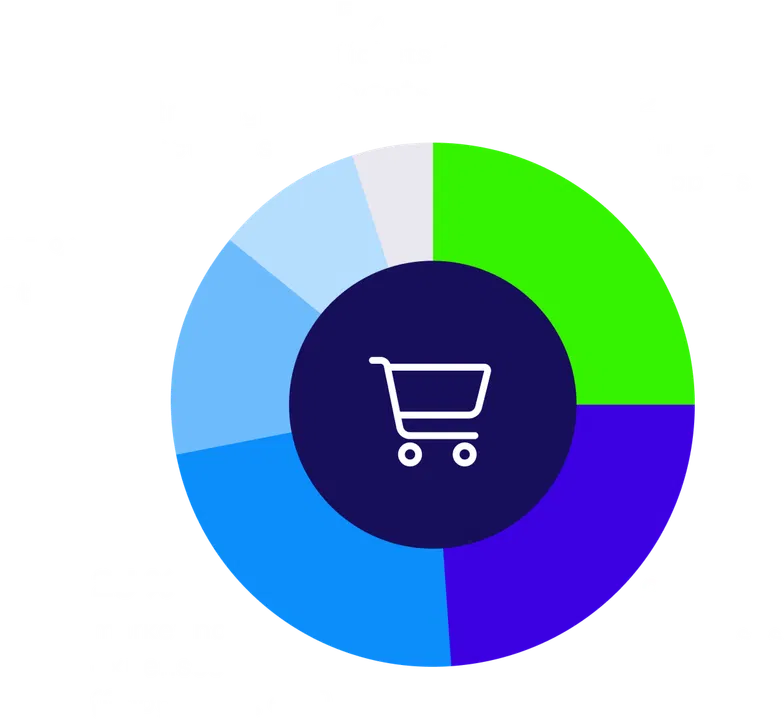
What are single-use AirPlus Virtual Cards most often used for?
Single-use
Single-use virtual cards are the standard type. In this version, a card number is generated for one-time use. Once used, the card is blocked for further payments. This is what makes virtual cards so secure.
The different types of virtual cards
Virtual cards come in several types, such as those for one-time payments and those used for recurring payments. Some providers also offer ways to integrate them into frequently used purchasing platforms, where card numbers are generated completely automatically and used to pay every time a purchase is made.
5
Source: AirPlus customer survey of users of AirPlus Virtual Cards


Sacmi is an international corporate group and worldwide leader in providing advanced technologies in industrial plant and equipment engineering. The company specialises in machines and full systems for the ceramics, metal, packaging, food and beverage industries and in manufacturingcontainers made of plastic and new materials. Sacmi is represented in 30 countries and has over 4,500 employees.
Case study | How Sacmi uses the virtual card with multi-use function
5
“Introducing AirPlus Virtual Cards with multi-use function has led to faster reconciliation, simpler processes, and improved cash flow at our organisation,” she adds. “That’s why we now use the multi-use version to pay for couriers,
Card numbers are generated based on Mastercard,” Amadeicontinues, “and can be restricted to a specific provider,maximum amount and fixed period. That guarantees us maximum security.
When AirPlus introduced virtual cards with multi-use function to us,” explains Daniela Amadei, Corporate Travel Manager at Sacmi, “we were convinced of the benefits right away. The multi-use function lets us make recurring payments, such as monthly ones, using a single card number. We now use virtual cards to pay all our phone bills across the group.”


Integrating virtual cards into procurement platforms
In this type of arrangement, which is actually a form of single-use, an interface to a purchasing platform is created. This is theoretically possible for any platform that connects buyers and sellers, whether external or internal. As soon as the employee places an order and clicks to pay, a virtual credit card is automatically generated in the background as the means of payment. The payment is then handled as usual via the provider of the virtual credit card. When the order is placed, additional information such as the project or cost centre can be required; this information then appears on the collective statement to make it easier to associate individual items with people, projects, or cost centers.
5


Buyer makes a purchase on a purchasing platform
Merchant receives purchase including virtual card for payment
Payment service provider (virtual credit card provider)
Merchant charges the virtual credit card and payment provider pays merchant using the Mastercard network Corporate customer Merchant or buyer
Corporate customer receives collective statement from payment service provider and pays it
Buyer’s virtual card is requested
Virtual card number is transferred for payment
Merchant
Purchasing platform
Corporate customer or buyer
Merchant provides service
Improving supplier relations with virtual cards
Using virtual cards to make payments is advantageous for more than just the buyer. Merchants also benefit from this payment method – despite merchant fees, which apply the same as other credit cards.
6


= More Days Payable
Extended payment time for the buyer
= Less Days Sales Outstanding
Faster collection time for the supplier
Approximate duration in days
With virtual credit card
With ACH transfer
Buyer is charged for payment
Supplier receives payment
Invoice receiving
Product/ service receiving
Invoice receiving
Supplier receives payment
Buyer initiates payment
Order
Product/ service receiving
Buyer initiates payment
Order


How suppliers benefit from virtual card payment
With virtual credit cards, companies not only increase their days payable outstanding (DPO), but also reduce their days sales outstanding (DSO) for their suppliers at the same time.

Advantages of virtual cards
6
Bank transfer versus virtual credit cards at a glance


virtual credit card
Payment with
Payment with
Bank transfer
Accepting cards can help with new customer acquisition

Faster receipt of payments, typically within two to three days

No financial incentives are needed for faster payment – which saves money

Accurate data enables clear allocation of incoming payments on the supplier side; less potential for disputes

Customer acquisition
Relationship with buyers/ customers
Cost
Cash flow
Potential for disputes if payments cannot be associated correctly at the supplier’s end due to incomplete or missing information

Traditionally required prompt payment discounts

Payments are made on fixed terms; buyers hesitate to release money, waiting until the last minute

Merchants that do not accept cards can be unattractive to some buyers

Acceptance of card payments can help suppliers acquire new customers, since paying by card is an attractive option for many companies.
Save time and money | Fewer resources are needed to track payment status, and the dunning process is completely eliminated.
More control and visibility
Better data facilitates and accelerates the process of associating incoming payments and invoices.
Lower days sales outstanding (DSO), since payment is typically received within two to three days


6
So what about the merchant fee a supplier has to pay when accepting credit cards? Can it still be worthwhile for the supplier to accept virtual cards? Yes, for many reasons. The acceptance fee, which is about 2%, is easily outweighed by the speed of the payment process and the payment security that is gained.
Card payments eliminate the risk of default, since that risk is shifted to the provider of the virtual card. That means the merchant saves an average of 2 % – the average amount of income lost to non-payment.
Merchants receive payment significantly faster when virtual cards are used, namely within two to three days as compared to funds transfers, which have an average DSO of about 47 days in Europe. To receive immediate payment by funds transfer, the merchant would have to offer a discount, which in Europe typically averages anywhere from 5 to 8%.

for suppliers (regardless of merchant fees) Why virtual cards are good business


Case study
Christian Touzet Deputy Procurement Director
In the past, Sagemcom employees used their personal credit cards for these kinds of purchases and then had to wait for reimbursement.
Sagemcom develops innovative products in the smart city, broadband, and audio and video segments. To craft models and prototypes, the R&D teams often have to make ad hoc purchases in very small amounts, typically from suppliers in France, but also in other countries. These suppliers are not generally part of the company’s existing supplier pool. To make sure the delivery goes quickly, the R&D teams place their orders online or visit a store in the local area.
7
Sagemcom on single-use virtual cards

explains Christian Touzet, Deputy Procurement Director at Sagemcom.
We could tell the demand was going to continue to grow, and that our R&D teams wouldn’t be able to do their work reasonably without this kind of online purchases,


And now?
7


Christian Touzet
“Implementing the virtual cards was simple and very fast”
As soon as our accounting team identifies an expense statement for a purchase that could have been handled using the virtual card, we ask the employee involved to use the new process instead and explain the advantages of doing so for both employees and the company,
Sagemcom relies on its accountants to make sure employees respect the new indirect purchasing process.
Introducing virtual cards for procurement has allowed Sagemcom to boost the security of payments, optimise cash flow, and enhance employee satisfaction.
Only one person at Sagemcom is responsible for generating cards and modifying parameters when necessary. Here’s what the process is like these days: If an R&D employee wants to make an ad hoc purchase, the employee sends a request to their supervisor. The supervisor approves the purchase, which is then made by a specific buyer at Sagemcom.
Implementing the virtual cards was simple and very fast,” Touzet explains.
Sagemcom now uses virtual cards from card provider AirPlus to centralize all one-time purchases made by their R&D teams. The company also used the launch of the cards to introduce a new process for indirect purchases online and to define the validation cycle associated with these purchases.


Improved cash flow
As soon as the virtual card is used, the relevant supplier invoice is paid directly by card provider AirPlus. All transactions that Sagemcom makes using the virtual credit cards within a certain period are combined by the provider of the virtual cards into a single easily understood statement and billed all at once – at the end of an agreed statement period. The company benefits from longer payment terms than those for individual suppliers
The detailed collective statement gives the company 100 % visibility for all of the expenses incurred by the R&D teams.
Secure purchases
There have been no cases of fraud or attempted fraud, internally or externally, since the company started using virtual cards. The monthly tatement lists all transactions in detail. It allows the purchasing and accounting teams to track expenses incurred on a specific basis
7
“The virtual cards have put stop to fraud.”

“In one year, we have used the virtual cards from AirPlus to pay for more than 300 purchases totaling almost € 150,000, a significant amount,” Touzet says. “Cash management is strategically important to Sagemcom, so we pay special attention to any process that can help improve our working capital and our cash flow. The virtual cards have helped us do this.”


Virtual cards have also simplified ad hoc purchasing processes for Sagemcom’s R&D employees. All purchases of this kind are now handled by the purchasing department. Employees no longer have to pay up front, and they don‘t have to deal with expense statements. “We have control over ad hoc purchases while also offering our internal customers an additional service,” Touzet adds. For their part, employees are happy to have more time for their core tasks.
Happier employees
Accounting works more efficiently
Fewer manual entries, less time and effort spent on reconciliation | There is a lot less manual work to do in accounting. All line items listed in the collective statement are automatically imported into Sagemcom’s SAP ERP system in CSV format, with information such as cost center and project number allocated accordingly. “Our card provider AirPlus acts as a single supplier, combining all supplier invoices into a single statement. Virtual cards have made it possible for us to boost efficiency across the entire indirect purchasing and procurement chain,” Touzet notes.
7
airplus.com/contact
AirPlus International
Do you have any questions? Feel free to contact us!
